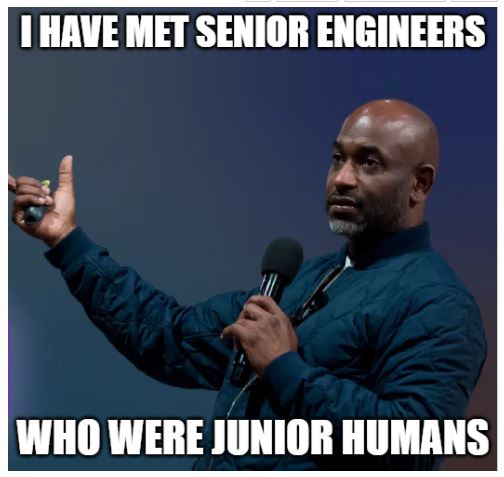
Use it or lose it.

Remember when we could find our way around without Google Maps? We relied on our own sense of direction, and you know what? It worked surprisingly well.

I think we're at a similar crossroads with AI tools. The more we rely on them, the easier it is to stop exercising our own thinking muscles.

The trick isn't to avoid using AI. It's to stay engaged while you use it.

Keep your skills sharp, let AI amplify them.

Like any skill, your mind sharpens with use. So keep thinking, keep questioning, and let AI be your co-pilot (pun intended), not the driver.

DRAMMA - A model for workplace well-being

Letter Concept What It Means Quick Example
D Detachment Mentally disconnect from work after hours No emails after 6 PM, switch off notifications
R Relaxation Calm your mind & body, reduce stress Short walk, meditation, music
A Autonomy Control over how/when/where you work Flexible hours, task choice, remote options
M Mastery Opportunities to learn & feel competent New skill, challenging project, training
M Meaning Work feels purposeful & valuable Connecting tasks to company mission, societal impact
A Affiliation Feeling connected & supported socially Team bonding, supportive colleagues, psychological safety

Success is aligning at a crossroad and acting...

"The world is for those who realise it's potential"

I believe that for most highly successful individuals, success was less about genius or relentless hard work and more about talented individuals finding themselves at a crossroad of opportunity.

History shows this repeatedly. Moments of technological change, market shifts, or structural resets create brief windows where the rules are rewritten, presented to a capable person who recognize the moment and help themselves.

Hard work still matters, but mostly after the luck has knocked on the door. Effort determines how far someone goes once they are in the game.

This is also why success often looks inevitable in hindsight. We romanticize grind and talent while underplaying timing, access, and early positioning. Survivorship bias makes success stories feel linear, even though they rarely are.

It reminds me of what many bowlers say about taking wickets in cricket. Skill and execution matter, but only up to a point. The rest depends on things outside their control. Does the edge carry or fall short? Is the catch held or dropped? How does the pitch behave?

Success, much like a wicket, is rarely earned by effort alone.

Workplace happiness survey by seek

Workplace happiness depends on shared responsibility between employees and organisations, with purpose, meaningful work, and strong leadership at the core.

If more than one of following is true:

  • ongoing lack of purpose
  •  unsupportive management
  • misaligned culture
  • frequent thoughts about changing jobs

maybe it is a sign to move on...

[1] How to be happier at work - SEEK - https://www.seek.com.au/career-advice/article/how-to-be-happier-at-work

Team building

Why do HR insist on team building on my personal time (after 5pm or on a Saturday) with a mandatory attendance?

If anything it is sending the opposite signal to me, you don't care for my personal boundary.

If “culture” requires sacrificing personal life, the problem isn’t the calendar. It’s the culture.

Challenging times feel long...

Challenging times feel long. That doesn’t mean they are.

Ask any batsman who endured Rudi Koertzen’s iconic, slow-rising finger.

For the batsman, it wasn’t just “out” … It was a slow crawl to death.

“Dude… just give me out already. I get it. I’m done.”

Good programmers copy

Good programmers copy, great programmers paste.

My introduction to StackOverflow was during a Kelsey Hightower demo, where he casually copied a snippet of code (probably staged) from the programmers Q&A site and uttered the iconic line "Good programmers copy, great programmers paste" 

Having a stellar reputation on the site now feels like a lost art, but back then, it was a fun ride while it lasted.